
 Moving into a new apartment enabled me to jumpstart my efforts to lead a more sustainable lifestyle. Here, I want to share with you a list of small actionable steps that I took during my moving process.
Beginning of the moving process
Declutter: Go through all of your belongings using any decluttering method of choice. Popular organizing methods include the KonMari Method and Swedish Death Cleaning. For clothing, I applied the method suggested by Sharrah of Live Your Style.
Bonus tips for items that fall into the ‘might toss/donate/sell’ category:
- A modification of Ryan Nicodemus of The Minimalists‘ ‘packing party’: Pack up all your ‘maybe’ belongings and store the boxed up items somewhere where they are easily accessible. For the next 21 days, only unpack the items that you absolutely need. After those 3 weeks are up, assess what is left in the storage boxes. The fact that you did not use these items over the course of these weeks confirms that you no longer need these items and can sell/donate them. There will likely be some exceptions such as seasonal items (e.g., you are unlikely to wear a bikini in the wintertime).
- The ‘Hanger’ hack for sorting clothes: Turn all your hangers in your closet backwards. Whenever you wear something, replace the hanger the right way. In a year, sell/donate any clothing items still hanging on the backwards hanger. This hack is applicable to all the clothing items that you decide to keep, including the ‘maybe’ items.
Sell/ donate unwanted items: Once you have completed the decluttering process, sell unwanted items at a local flea market or online. You could also host a ‘trunk show’ at home for family, friends and friends of friends. Alternatively, you could donate any unwanted items; however, I recommend that you research the organizations that accept donations prior to donating. Unfortunately, some organizations are not as charitable as they claim to be. Some actually try to make a profit off your donated items. Furthermore, please toss or recycle any items that are damaged or are no longer in proper condition for reuse like used underwear. Only sell/ donate items that you would feel comfortable purchasing/ using.
Bonus tips for selling at flea markets:
- Selling shoes? Just leave one shoe out front. This prevents people from stealing your shoes – it is a sad reality.
- Only have whole USD or Euro prices, i.e. 1 EUR and not 1.50 EUR, so that you do not have any issues giving back change.
- Keep your stand organized and presentable at all times. It not only makes your stand more attractive to buyers, but also helps speed up the passing of time, as you are constantly occupied with either selling or organizing.
- Always keep a friendly demeanor, even if (potential) buyers complain or are impolite. I know that this is often easier said than done, but it is crucial for selling. Smile!
Borrow/ adopt used moving boxes: Ask friends and family if they have used moving boxes that you could borrow or adopt prior to purchasing your own. Moving boxes tend to be quite sturdy and thus can be used multiple times.
During the moving process:
Compensate your CO2 emissions: Regardless of whether you hired movers or rented a van from a rental car service and are doing the move yourself, it is possible to calculate the CO2 emissions generated and to compensate accordingly. For instance, by providing voluntary climate payments to Amosfair renewable energies in over 15 countries worldwide are promoted, developed and financed.
After the moving process:
‘No new stuff’ at the beginning: I recently watched this YouTube video in which the host recommends first living in the new space before adding ‘new’ items to it. The rationale behind this concept is that you first get to know what works for your new space and work does not, as well as to recognize what your space is missing and might add value (not necessarily in the profit sense of the term) to it. By adopting this approach, the decorating process becomes organic in nature and takes time. I fully recognize how nice it is to move into a new place and to have everything fully decorated; however, this can result in purchasing unnecessary items or items that do not work for the space. In doing so, you are, among other things, wasting money and resources. So before adding ‘new’ items to your place, first get to know it!
Add missing items: After living with your space, you now know what your space still needs. How do you move forth?
- Borrow/ adopt items from friends and family: I have adopted quite a lot of furniture from my family. The chairs completing my dining arrangement belong to my father. My coffee table was designed and used by my father. Much of the art around my apartment was created my mother and my sister. You will be surprised how willing your family and friends are willing to give away their things for free or in exchange for a small fee.
- Thrift/ DIY: Purchase used items that you can revamp from concession stores or at flea markets. Lone Fox offers many affordable and creative DIY ideas.
- Buy used items online: eBay often has a good selection of used items. For electronic equipment, check out refurbed.de (German website) or rebuy.de (German website). These websites also provide warranties for sold items.
- Buying new appliances: Check the energy rating of used and new appliances, to make sure that you are opting for an appliance that not only meets your needs, but also is not unnecessarily costly in the monetary sense and harmful to the natural environment.
This list is by no means exhaustive and might not be applicable for you. Please take from this list what works for you. I welcome comments on relevant steps that you have taken when moving house, as well as any feedback on your experience implementing any of the provided steps.
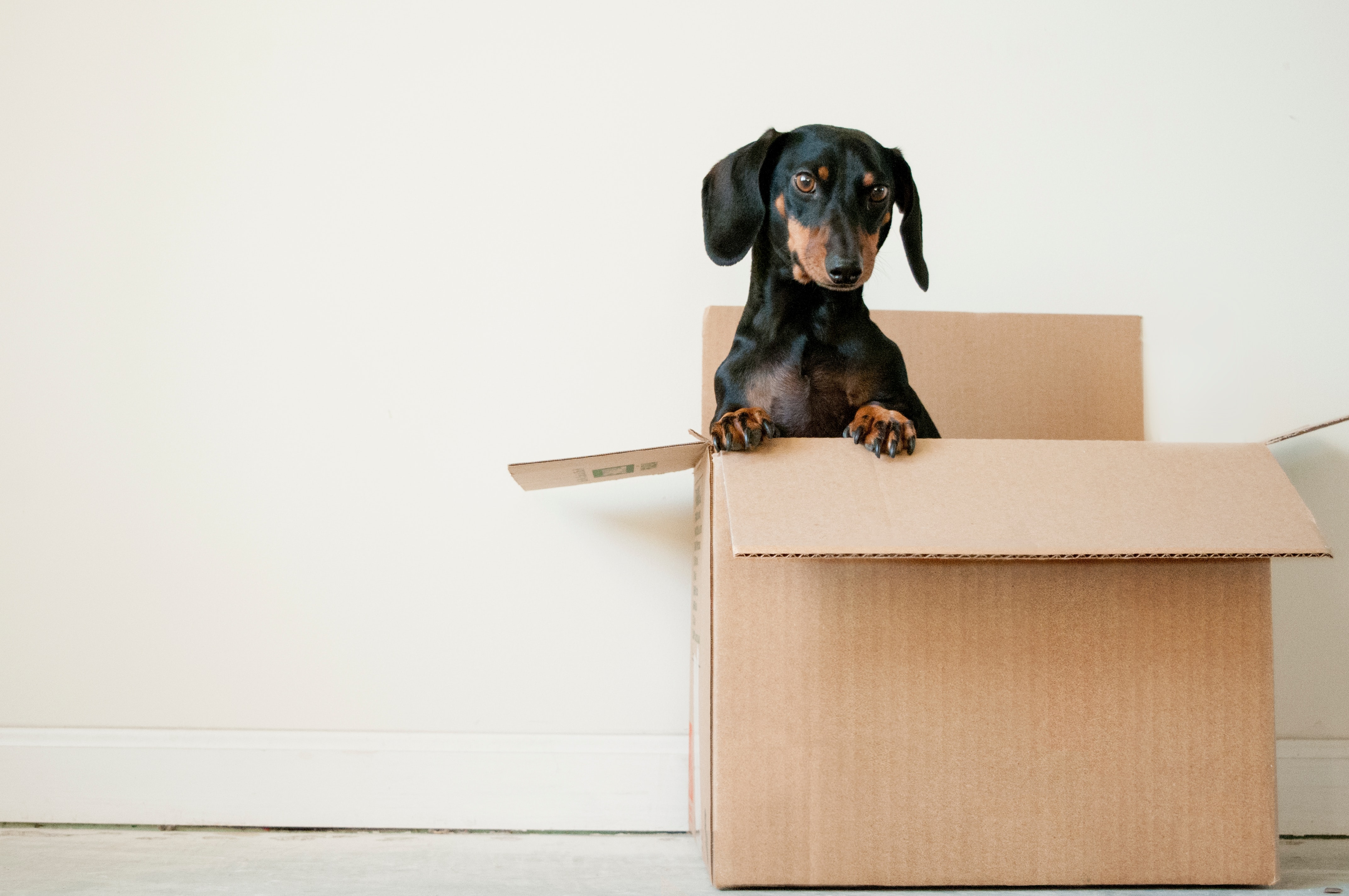
Photo by Erda Estremera on Unsplash
 belle + wild